

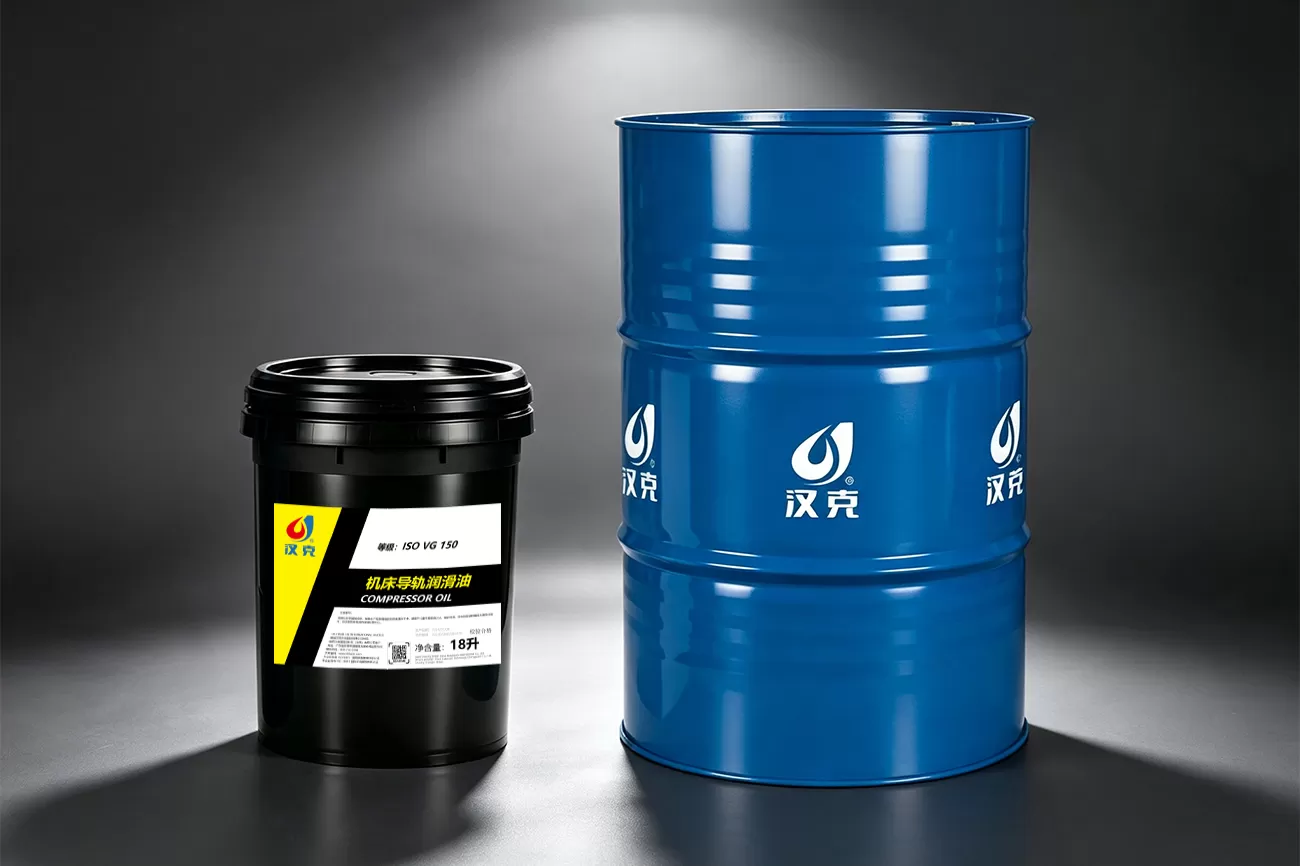

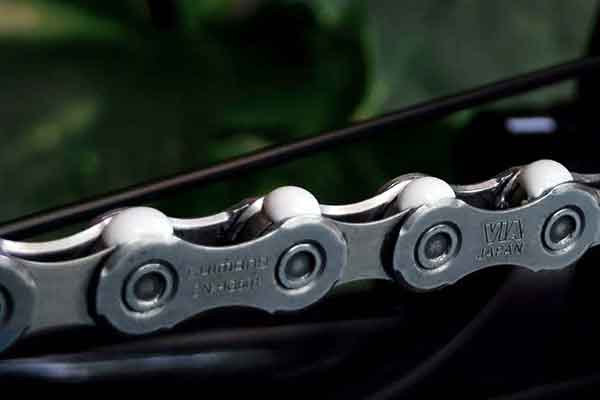

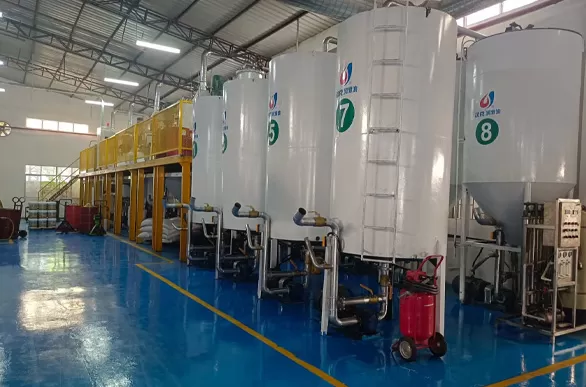

In the long chain of industrial production and equipment maintenance, metal rust prevention is often an easily overlooked yet crucial link. During humid seasons or long-term storage, rust silently erodes workpiece surfaces—at best affecting appearance and precision, at worst causing entire components to be scrapped, resulting in significant economic losses. Many engineers, when selecting rust preventive oil, often only look at price or viscosity, ignoring the rust prevention principle, applicable materials, and compatibility with subsequent processes. In fact, choosing the right rust preventive oil not only keeps metal in factory-grade smoothness and performance for a long time, but also greatly reduces maintenance costs and downtime risks. The Hank BS-400 series rust preventive oil is a professional product developed precisely for this deep-seated need, redefining the industry standard of "metal staying like new" with solid formulations and visible results.
I. Why Does Metal Rust? How Much Does Choosing the Wrong Rust Preventive Oil Cost?
The essence of metal rusting is the electrochemical corrosion of iron or iron alloys with oxygen and moisture in the air. Once a water film forms on the surface—even an extremely thin one—it becomes the electrolyte of a micro-battery, accelerating anodic dissolution. The reddish-brown rust seen in daily life is actually a mixture of hydrated iron oxides, with a loose structure that cannot prevent corrosion from spreading inward; instead, it adsorbs more moisture, creating a vicious cycle. For precision bearings, gears, molds, cutting tools, and other workpieces, rust not only changes dimensional tolerances but also affects surface roughness, and can even induce stress concentration, leading to premature fatigue fracture.
Many companies, in order to save costs, choose ordinary mineral oil or inferior rust preventive oil, resulting in a "fake rust prevention" phenomenon: the surface appears oily and shiny right after application, but brown spots begin to appear at edges after a few months. The reason is that low-end products have insufficient rust inhibitor additives or use volatile solvent carriers that cannot form a stable, dense adsorption film on the metal surface. What's worse, some rust preventive oils are incompatible with the lubricating grease or paint used in subsequent assembly, causing residual oil films to compromise assembly quality and increase rework rates. It is clear that choosing the right rust preventive oil is not a matter of "good enough"—it is a technical investment that requires scientific decision-making.
II. Core Value of the Hank BS-400 Series: Advancing from "Coverage" to "Film Formation"
The reason the Hank BS-400 series rust preventive oil stands out among numerous competitors lies in its unique film-forming mechanism and composite rust prevention system. Rather than simply isolating air with an oil film, it forms a firm chemical adsorption with the metal surface through polar groups, creating a uniform, dense, and tough molecular-level protective layer. This film effectively repels water molecules and corrosive ions, maintaining long-term stable protective performance even in high-humidity, salt spray, or industrial acidic gas environments.
The series offers multiple viscosity grades and drying types for different application scenarios. For example, BS-401 is a solvent-based quick-dry rust preventive oil suitable for temporary rust prevention after parts processing, forming a semi-dry film after drying that is non-sticky and dust-free, allowing direct handling in subsequent processes; BS-402 is a medium-viscosity oil-film type that combines rust prevention and lubrication, suitable for components requiring dynamic operation such as bearings and chains; BS-403 is a long-term preservation type, formulated with high-flash-point base oil and powerful corrosion inhibitors, suitable for long-term warehousing or export shipping, with a protection period of up to two years or more. This refined product matrix allows engineers to precisely match the most suitable rust prevention solution based on workpiece material, storage environment, and process integration method—rather than "one bottle for everything."
It is worth mentioning that the BS-400 series adopts an advanced low-aromatic solvent system, with lower VOC content and a milder odor, so operators do not feel significant discomfort even with prolonged exposure. At the same time, the product is free of harmful substances such as nitrites and barium salts, reducing waste liquid treatment pressure and complying with increasingly stringent environmental regulations. This friendliness toward "people" and "the environment" makes Hank not just a high-performance rust preventive oil, but a sustainable green maintenance solution.
III. Real-World Application Validation: From Precision Parts to Large Equipment
Theory alone is not enough. The reliability of the Hank BS-400 series has been repeatedly verified in numerous real-world operating conditions. An automotive parts supplier was once plagued by inventory rust issues on precision-ground bushings—after cleaning and drying, the workpieces were coated with ordinary rust preventive oil, but during the plum rain season in the south, warehouse relative humidity often exceeded 85%, and fine rust spots still appeared on the surface. After introducing BS-403 for preservation testing, the coated parts were placed in a constant temperature and humidity chamber at 65°C and 95% relative humidity for 360 continuous hours. Upon inspection, the metal surfaces remained bright and new with no rust spots whatsoever. The supplier subsequently switched all precision-ground parts to the Hank BS-400 series, and customer complaint rates dropped directly by 70% within one year.
In the heavy machinery sector, the BS-402 also demonstrates outstanding synergistic performance. A mining equipment maintenance workshop needed medium-term rust prevention on the tooth surfaces of large gears, while also requiring that no additional starting resistance be introduced. The construction personnel tried applying BS-402 to the tooth surfaces, and the oil film adhered well. After one month of outdoor storage, the gear surfaces showed no signs of rust, and when the equipment was restarted, the initial torque was almost identical to that under standard lubrication conditions. This is attributed to the anti-wear and friction-reducing additives specially incorporated into BS-402, which form an auxiliary lubricating film while providing rust prevention, truly achieving "integrated rust prevention and lubrication."
For small precision parts, such as measuring tools, cutting tools, and stampings, the BS-401 quick-dry type offers greater advantages. It evaporates rapidly, allowing workpieces to be packaged and stored within minutes after dip coating, with no sticky oil residue on the surface, making it especially suitable for automated in-line production. A tool manufacturer reported that after adopting BS-401, the rust prevention period for milling cutter shanks extended from the original two weeks to five months, while the surface cleanliness of the tools actually improved, and the coating adhesion was unaffected. Such cases are numerous, all confirming the technical confidence of the Hank BS-400 series in "adapting to needs, providing everything."
4. How to correctly use the Hank BS-400 series to maximize rust prevention effectiveness
No matter how good a rust preventive oil is, improper usage can lead to twice the effort with half the results. To truly keep metal surfaces as good as new for extended periods, three key aspects must be controlled.
First, the cleanliness of the metal surface directly determines the adhesion of the rust preventive oil. Before application, cutting fluid, hand sweat, salt, and residual adhesive should be thoroughly removed from the workpiece surface. The extreme pressure agents in cutting fluids often compete with rust inhibitors for adsorption, causing premature failure in thin oil film areas. Therefore, it is recommended to use Hank's matching cleaning agents for ultrasonic or spray cleaning, and ensure the workpieces are fully dried before dip coating. If a water film remains on the surface, be sure to dry or blow it off first, and avoid "wet coating."
Second, control the oil film thickness and uniformity. If the oil film is too thin, it cannot cover microscopic roughness peaks and is easily penetrated by moisture; if too thick, it causes waste and may affect tolerances for assembled parts. Generally, a film thickness of 15 to 25 microns is recommended. During dip coating, the concentration or viscosity of the rust preventive oil can be appropriately adjusted, and heating and insulation methods can be used to reduce viscosity, allowing the oil film to level better when the workpiece is lifted. For spray application, select the appropriate nozzle diameter and pressure to avoid localized accumulation.
Third, rationally plan the anti-rust cycle and packaging methods. Each model in the BS-400 series has a clear anti-rust period, which should be selected based on storage conditions. For outdoor or marine environments, sealed packaging should be used, and an appropriate amount of desiccant should be placed inside the packaging. For indoor storage, avoid direct sunlight and sudden temperature changes to prevent the anti-rust oil from falling off due to condensation. For valuable precision parts, after the outer oil film dries, wrap them with vapor-phase anti-rust paper for double protection. Regularly inspect the anti-rust status and reapply in time to ensure everything is foolproof.
5. From choosing the right product to using it correctly: the comprehensive benefits of the Hank BS-400 series
Many companies think that switching to a different anti-rust oil is just an additional chemical expense, but they don't realize that the real costs are hidden in scrapped parts caused by rust, rework hours, customer compensation, and brand reputation damage. The Hank BS-400 series, with its longer protection period and more stable protective performance, helps users significantly reduce these hidden expenses. Customers who have conducted detailed cost calculations found that the annual comprehensive anti-rust cost of using BS-403 is actually about 40% lower than using ordinary anti-rust oil, because there is no longer a need for frequent reapplication, re-inspection, and disposal of rusted waste.
More importantly, the BS-400 series provides a full range of technical service support. The Hank engineering team will assist customers in conducting salt spray tests, damp heat tests, and metal suitability assessments, provide free samples for trial, and even customize anti-rust solutions based on specific environments. This closed-loop service of 'selection + usage + verification' allows companies to no longer rely on empirical methods to guess which oil is more suitable, but to use data to speak and results to verify.
In today's increasingly competitive metal processing industry, equipment precision and product delivery cycles are the lifelines of a company. A precision lead screw scrapped due to rust could bring an entire automated production line to a halt; a batch of exported parts with rust spots during transportation could destroy years of customer trust. Choosing the right anti-rust oil has never been an optional question, but a mandatory one related to survival and development. The Hank BS-400 series, with its solid formula, strict quality control, and comprehensive service, puts an invisible anti-corrosion armor on every metal part, keeping them as bright as new over time. Whether you are a process engineer in a machining factory or a person in charge of equipment maintenance, why not start today by re-examining the can of anti-rust oil at hand—it may be the key step to enhancing your long-term competitiveness. Choosing Hank BS-400 means choosing a more worry-free, longer-lasting, and more professional metal maintenance approach.