


Basic Differences Between Lubricating Oil and Grease
| Comparison Item | Lubricating Oil | Grease |
|---|---|---|
| Form | Liquid, good fluidity | Semi-fluid or semi-solid paste, with adhesiveness |
| Composition | Base oil (about 90%) + additives (about 10%) | Base oil (70%~90%) + thickener (8%~30%) + additives ( |
| Heat dissipation capability | Good; heat can be carried away through circulation | Poor; not conducive to rapid heat conduction |
| Sealed and dustproof | Average | Good; can effectively isolate moisture, dust, and impurities |
| Application scenarios | High-speed or circulating lubrication points such as engines, gearboxes, and hydraulic systems | Low-speed heavy-duty bearings and locations requiring long-term lubrication that are difficult to replace |
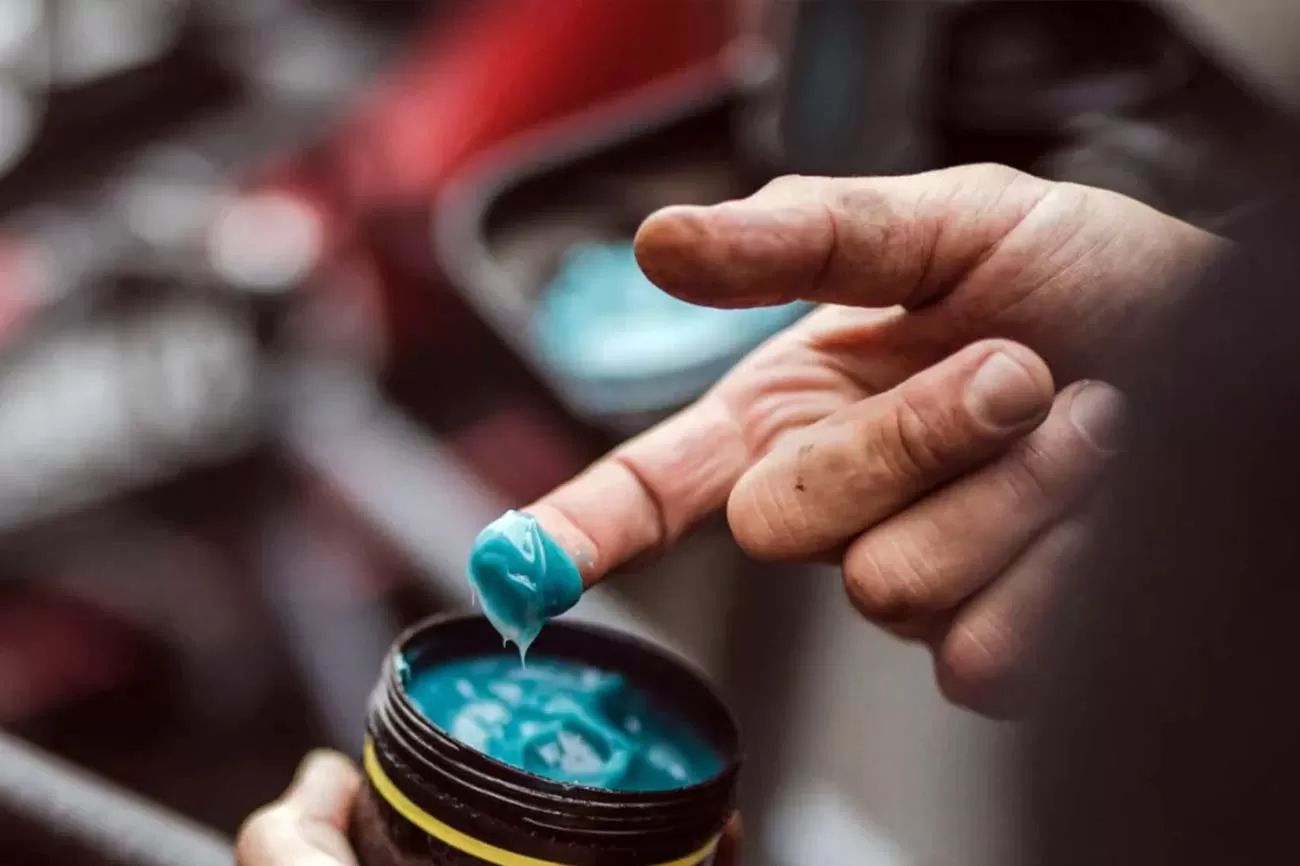
Grease can be understood as lubricating oil with a thickener added (similar to a sponge structure), which adsorbs and locks the base oil within a three-dimensional network, serving to hold and slowly release the lubricating oil. Its lubricating performance mainly depends on the quality of the base oil.
Eight Major Functions of Lubricants
Cooling and Heat Dissipation — Prevents friction-generated heat from raising component temperatures, avoiding aggravated adhesive and corrosive wear; Sealing Protection — Isolates moisture, oxygen, and harmful media in humid air, preventing leakage of internal media; Cleaning Contaminants — Carries away abrasive particles generated by friction and external impurities, reducing wear; Reducing Friction and Wear — Forms a lubricating film to lower the friction factor between two moving parts; Rust Prevention — Protects metal surfaces from corrosion; Vibration Damping — Provides damping and vibration absorption; Reducing Power Consumption — Improves equipment operating characteristics and extends equipment life; Power Transmission — Transmits power in equipment such as hydraulic systems.
Composition of Lubricating Oil
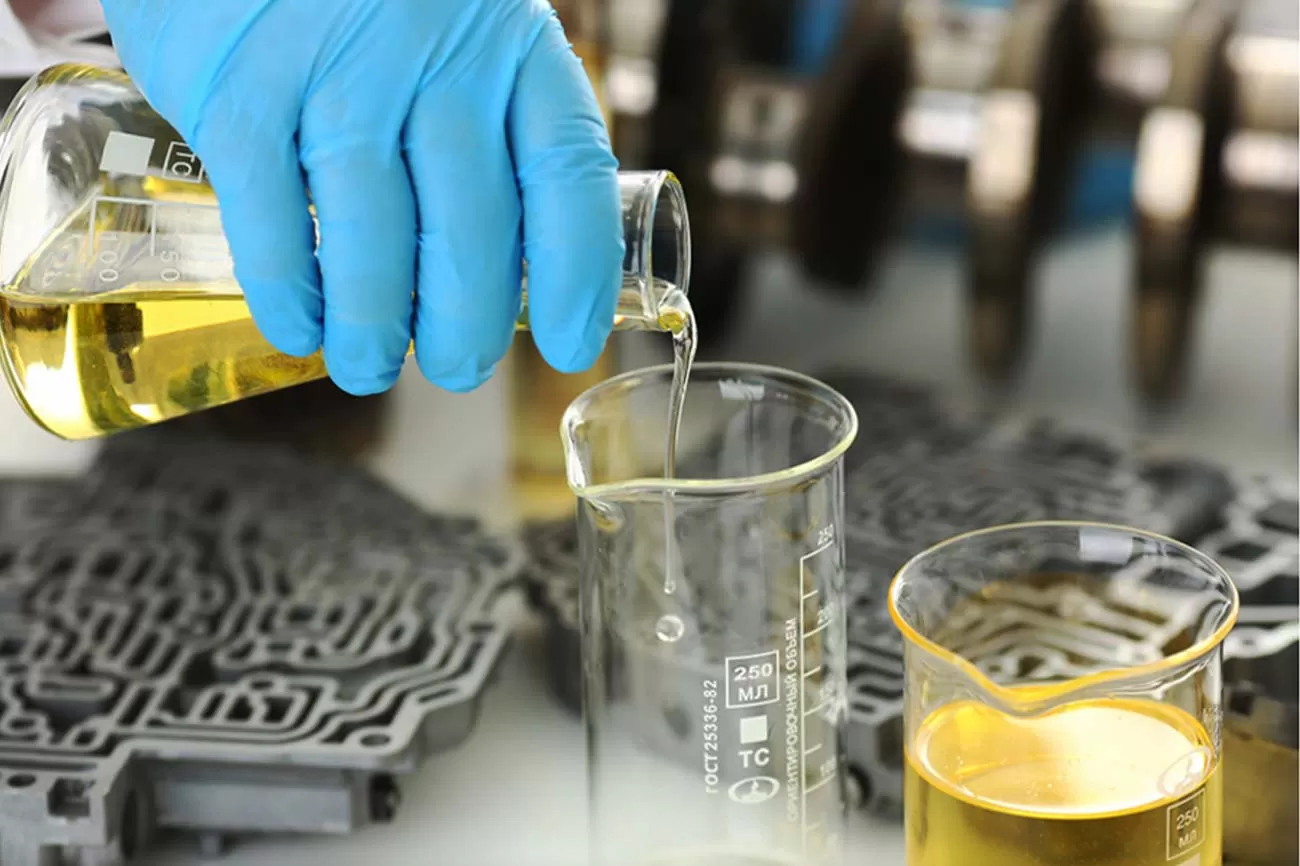
Lubricating oil consists of base oil and additives. Base oil is the main component and determines the basic properties of the lubricant, mainly divided into four categories: paraffinic, naphthenic, aromatic, and synthetic. In engine oil, base oil typically accounts for about 90%, and its quality is crucial to performance, providing the most fundamental lubrication and cooling functions. Additives are used to compensate for and improve the deficiencies of base oil and impart new properties, commonly including anti-wear agents, antioxidants, rust inhibitors, detergent dispersants, viscosity index improvers, and more.
Factors to Consider When Selecting Lubricating Oil
Movement Speed — Low-viscosity oil is suitable for high speeds, while high-viscosity oil can be used for low speeds; Operating Temperature — Oil with higher viscosity or good oxidation resistance should be selected for high temperatures; Load Conditions — Oil with high viscosity or good extreme-pressure performance should be selected when bearing heavy or impact loads; Fit Clearance — High-viscosity oil should be selected for large clearances in moving pairs, and low-viscosity oil for small clearances; Surface Roughness — High-viscosity oil should be selected for high roughness, and low-viscosity oil otherwise; Working Environment — Oil with good anti-emulsification or anti-corrosion performance should be selected in humid conditions or where chemical media are present.
Applications of Common Greases
| Grease Type | Main Characteristics | Operating Temperature Range | Applications |
|---|---|---|---|
| Calcium-based grease | Good water resistance, poor high-temperature resistance | -10℃ ~ 60℃ | Humid environments or parts in contact with water, such as agricultural machinery and water pump bearings |
| Sodium-based grease | Good high-temperature resistance, poor water resistance (emulsifies in water) | -10℃ ~ 110℃ | Dry high-temperature environments, such as motor bearings and fan bearings |
| Lithium-based grease | Excellent heat and water resistance, good general-purpose performance | -20℃ ~ 120℃ | Most general applications such as industrial bearings, motors, and automotive wheel hubs |
| Extreme-pressure lithium grease | Contains extreme-pressure additives, withstands heavy loads | Depends on base oil | Heavy-duty gears, rolling mill bearings, mining equipment |
| Molybdenum disulfide lithium grease | Contains molybdenum disulfide, resists extreme pressure and vibration | Depends on base oil | Impact loads, vibration, or low-speed heavy-load locations |
| Complex Calcium-Based Grease | High temperature resistance, high load | -20℃ ~ 150℃ and above | High-temperature and high-load conditions, such as continuous casting machine and sintering machine bearings |
| Polyurea Grease | Long life at high temperatures, good oxidation stability | -20℃ ~ 180℃ | High-temperature, long-life maintenance-free applications, such as sealed bearings |
Key points for selecting grease based on operating conditions
In addition to referring to the equipment manual, actual operating conditions must also be comprehensively considered:
In humid environments, sodium-based grease should not be used (it emulsifies and washes away easily with water); calcium-based or lithium-based grease should be selected instead;
For parts in contact with acidic gases, grease with good acid resistance should be selected;
In high-temperature environments, grease with a dropping point at least 20–30°C above the operating temperature should be selected;
For heavy loads at low speeds, select a high-viscosity base oil with extreme-pressure additives and slightly higher consistency (NLGI No. 2 or No. 3);
For high speeds and light loads, select a low-viscosity base oil and lower consistency (NLGI No. 1 or No. 2) to avoid churning and heat generation;
Centralized lubrication systems require NLGI No. 00 or No. 1 grease with good pumpability.
Selection of Grease Grades (NLGI Numbers)
| Lubrication Method or Application Requirements | Recommended Grade (Penetration Grade) |
|---|---|
| Centralized Lubrication System (requires pumping) | No. 00 or No. 1 |
| Manually apply with a grease gun or grease cup | No. 1, No. 2, or No. 3 |
| Sealed areas that are not re-greased for long periods | No. 2 or No. 3 (thicker, less prone to leakage) |
| General rolling bearings | No. 2 or No. 3 |
| Open gears or gearboxes | No. 0 or No. 1 (softer, easier to reach tooth surfaces) |
Why equipment temperature rises or wear persists after grease is applied
Insufficient grease fill leads to poor lubrication, increased friction and heat; excessive grease fill causes high churning resistance and poor heat dissipation; mismatched or poor-quality grease types cannot form an effective oil film; newly added grease that is not quickly and evenly distributed causes excessive local friction; mixing different types of grease destroys structure or triggers additive reactions, degrading performance; lack of a run-in period—the correct practice is to run at 30%~60% of standard speed for a period after greasing so the grease spreads evenly before running at full speed.
Can grease be diluted by adding lubricating oil?
No. Grease is a colloidal structure composed of thickener and base oil. Adding lubricating oil after the grease has formed cannot be evenly dispersed even with stirring, and it easily separates and leaks out during use, thereby losing the grease's adhesion and sealing properties. If a softer grease is needed in winter, choose a lower NLGI grade product such as No. 1 or No. 2 directly instead of adding lubricating oil yourself.
Can different types of grease be mixed?
In principle, no. Mixing different thickeners (such as lithium-based and calcium-based) may destroy the colloidal structure, causing the grease to soften or harden; different additives (especially extreme-pressure agents) may react chemically and produce corrosive substances. When changing grease types, the old grease should be thoroughly removed, preferably flushed out with the new grease before refilling.
Is more grease always better for wheel hub bearings?
No. If the hub cavity is overfilled with grease, most of it will be thrown onto the cavity walls and cannot participate in bearing lubrication, while increasing churning resistance and raising temperature. Grease melted at high temperature may seep into the brake drum and cause brake failure. The correct practice is "dry hub lubrication"—apply an appropriate amount of grease only to the bearing rolling elements and raceway surfaces, and do not fill the cavity.
Why does grease harden?
High temperatures cause excessive evaporation or loss of base oil from the thickener, hardening the grease; centrifugal force from high-speed rotation throws out the base oil, thickening the residual grease; excessively long service periods (over 6 months to one year) cause base oil oxidation and volatilization; oil separation under sustained heavy pressure; prolonged storage or high storage temperatures also accelerate aging. Hardened grease cannot provide adequate lubrication and should be replaced promptly.
Is it normal for lubricating oil to turn black?
There are usually three reasons why oil turns black: the lubricating oil itself oxidizes and deteriorates; metal powder from equipment wear mixes in; external contaminants (dust, damaged seals) enter. A slight darkening after a period of use is normal, but it should not become very black (engine oil is an exception—diesel engine oil turns black due to the action of detergent-dispersant additives, which is normal). If it turns black quickly without external contaminants, it may be an oil quality issue, and you should consider changing the brand or grade.
What causes oil to turn white?
It is generally emulsification after water ingress, turning the oil milky white or cloudy. Water entering the oil destroys the oil film, accelerates oxidation, and causes additives to fail. If whitening is found, immediately check whether the oil seal is damaged, trace the water source, thoroughly clean the system before changing the oil, and store oil drums in a rain-sheltered place.
Can old and new oil be mixed when changing oil?
Not recommended. Old oil contains harmful substances such as wear particles, oxides, and moisture; mixing it with new oil lowers the grade of the new oil and shortens its service life. When changing oil, drain the old oil as completely as possible, preferably flush the system once with new oil before adding.
Can used lubricating oil be reused after settling?
No. After use, all performance indicators of the oil have declined, additives are depleted, and oxidation products and fine particles cannot be removed by simple settling. Reusing it is equivalent to using a non-compliant product and will aggravate equipment wear.
The "Five Fixeds" of equipment lubrication management
Fixed point—clearly identify the location and number of each lubrication point on the equipment; fixed time—add oil, inspect, and change oil at specified intervals; fixed quality—select the specified grade and quality of lubricant according to equipment requirements; fixed quantity—control the amount added each time to avoid over- or under-lubrication; fixed person—assign dedicated personnel and establish a responsibility system.