




In the long chain of metalworking and manufacturing, rust prevention has never been a perfunctory extra step that can be glossed over—it is a silent battle over quality, cost, and reputation. From the brief stacking of blanks after they come off the line, to precision parts waiting for assembly on the production line; from the jolts of domestic overland transport, to containers crossing the Pacific drifting for thirty days through salt spray and high humidity—at every stage, metal surfaces are locked in fierce contention with oxygen, moisture, sweat, and industrial atmosphere. A single lapse, and corrosion spreads like vines, devouring the precision and finish accumulated over dozens of processes—and with it, the customer's trust in the supplier.
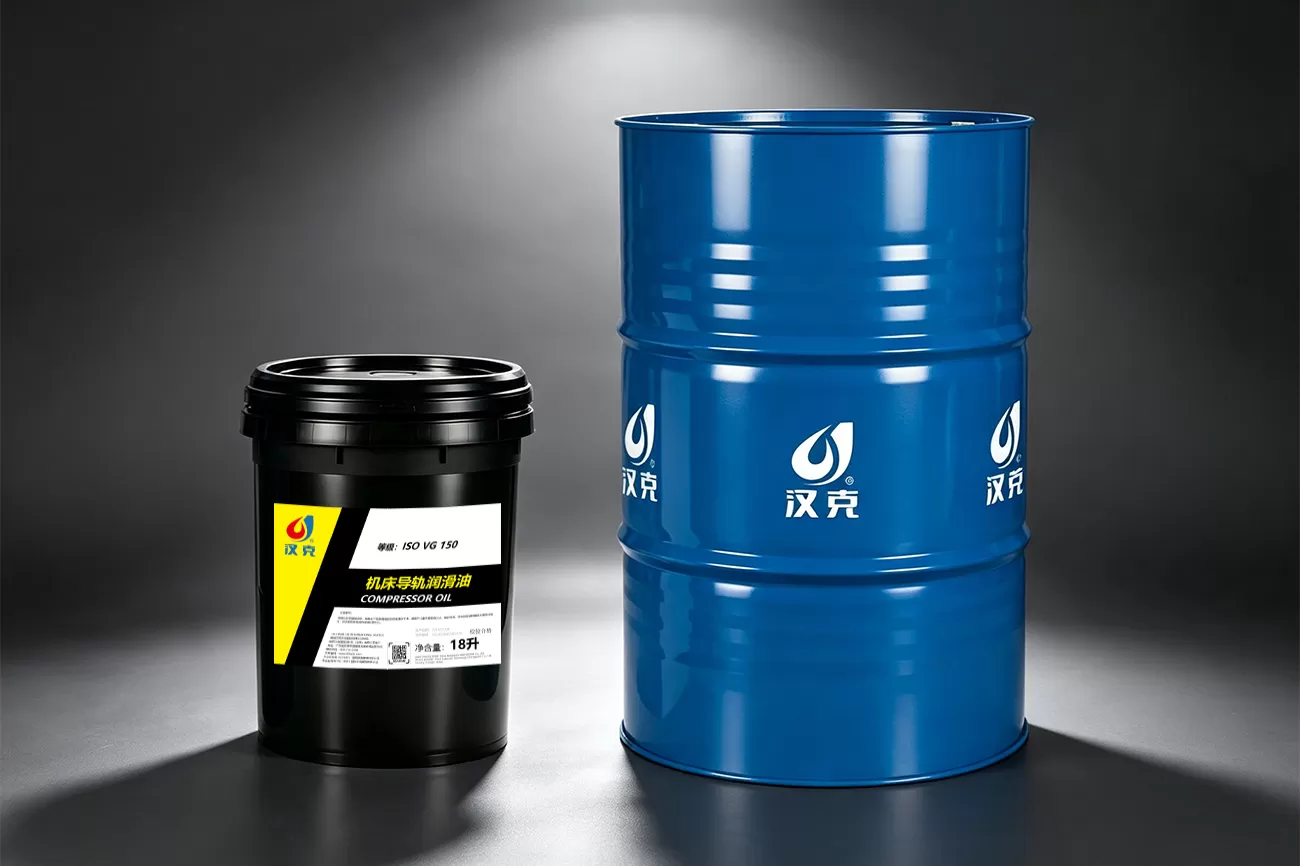
It is precisely against these industry pain points that the Hank BS-400 series rust preventive oil was born. It is not a simple oil product, but a modular rust-prevention solution covering the full spectrum of "inter-process—warehousing—export ocean shipping" scenarios. Drawing on a deep understanding of metal corrosion mechanisms and the synergistic action of advanced additive formulations, the BS-400 series successfully breaks the binary opposition of traditional rust preventive oils—"only short-term protection" or "difficult to clean"—and has become the preferred protective barrier for numerous precision machinery, auto parts, bearing, tool, and mold enterprises.
I. Inter-process rust prevention: precise companionship for the "awaiting processing" state
Inside the factory, inter-process rust prevention is often the most easily overlooked, yet it is also a high-incidence area for corrosion losses. After workpieces undergo turning, milling, and grinding, residual cutting fluid, coolant, and salts from operators' hand sweat quickly form electrochemical corrosion micro-cells on the metal surface. Temperature fluctuations in the workshop environment in particular readily produce condensation, causing "water-mark rust" or "fingerprint rust" on workpieces within hours.
The inter-process application of the Hank BS-400 series embodies the wisdom of "just right." Its unique solvent-based carrier spreads rapidly after spray or dip application, displacing moisture and residual sweat on the metal surface and forming an extremely thin protective film. This film has controllable thickness and is uniform and dense; it effectively isolates oxygen and water vapor in the air without affecting subsequent measurement, assembly, or welding processes. More critically, the BS-400 series offers multiple viscosity and film-thickness grades designed for different turnover cycles—for workpieces entering the next process the same day, low-viscosity grades enable rapid evaporation with essentially no residue; for semi-finished goods in intermediate storage that must be kept for weeks or even months, medium- to high-viscosity grades provide longer-lasting sealing protection.
In practice, many enterprises use the BS-400 series as the core of an integrated "cleaning—rust prevention—transfer" process. After cleaning, workpieces are dipped directly into BS-400 diluent, lifted out and drained, and can then wait securely in parts boxes or turnover racks. Workers no longer need to worry about "will it rust tomorrow," nor do they need to laboriously remove thick oil films before assembly. This precise companionship turns inter-process waiting from a window of quality risk into a smooth buffer zone in the production rhythm.
II. Export ocean shipping: confronting the triple test of salt spray, high temperature, and long-term enclosure
If inter-process rust prevention is a "sprint," then export ocean-shipping rust prevention is a "marathon." When a container loaded with metal workpieces leaves the port, the cargo faces an extremely harsh microenvironment: temperatures inside the hold can soar above 60°C, with condensation recurring due to day-night temperature swings; salt-spray particles carried by sea winds penetrate everywhere, depositing on metal surfaces to form strongly electrolytic solutions; and on top of that, dozens of days or even months of enclosed stacking without ventilation allow corrosive media concentrations to accumulate continuously. Many rust preventive oils that perform well in domestic warehousing develop serious defects en route—"under-film corrosion," "white spots," or "rust-liquid flow marks."
From the outset of development, the Hank BS-400 series aimed at the highest international ocean-shipping protection standards. The product system specifically strengthens salt-spray resistance and resistance to humid-heat aging. Its film-forming components employ a synergistic system of high-molecular-weight synthetic resins and composite corrosion inhibitors, building a "molecular-level fortress" on the metal surface. This protective film is not only hydrophobic and salt-repellent but also exhibits a degree of self-healing tendency—when the film is slightly damaged by external force, corrosion inhibitor molecules migrate to the exposed point for secondary repair, greatly blocking the pathways of corrosion.
In salt-spray tests by authoritative third-party institutions, the high-protection grades of the BS-400 series easily pass 72-hour and even 120-hour neutral salt-spray tests without pitting or spreading of the film. At the same time, for the "stacked packaging" and "confined package" conditions common in ocean shipping, this series has extremely low volatility in high-temperature, high-humidity environments, keeping the oil film stable over the long term without drying out, cracking, or dripping to contaminate cartons and pallets. This means that whether goods are shipped to the hot, humid ports of Southeast Asia, the cold docks of Northern Europe, or even through the high-temperature sea areas near the equator, the Hank BS-400 series maintains its unwavering protective stance, ensuring workpieces are "as new at first sight" when the container is opened.
3. More Than Rust Prevention: Easy Cleaning and Friendly Compatibility with Subsequent Processes
Traditionally, strong rust prevention often means a thick oil film that is difficult to remove. However, the Hank BS-400 series breaks this paradox through scientific molecular design. The base oils and film-forming agents it uses all have good solvent solubility. When a degreasing cleaning process is required later, only conventional alkaline cleaners or solvent rinsing are needed to quickly and thoroughly remove the protective film, leaving no residual oil and not interfering with the adhesion of subsequent electroplating, phosphating, or coating.
This characteristic is particularly important for export trading companies. Many precision parts still need to be assembled or surface-treated after reaching overseas customers. If the rust preventive oil is difficult to clean, customers have to add extra cleaning steps and wastewater treatment costs, which in turn affects their satisfaction with the supplier. While providing excellent rust prevention performance, the Hank BS-400 series treats "cleanability" as a core indicator equally important as protective capability, truly achieving "offense when needed, defense when required"—it can withstand the salt spray during sea transport and also meet the挑剔 demands after delivery.
In addition, this series fully considers operator safety and environmental requirements. The product does not contain controlled aromatic hydrocarbon solvents, has low odor and low toxicity, and has a higher flash point than similar ordinary solvent-based rust preventive oils. When used under workshop ventilation conditions, it will not cause obvious discomfort to operators. Some models have also passed the EU RoHS and REACH restricted substances testing, clearing potential obstacles for export enterprises regarding environmental compliance.
4. Application Examples: Comprehensive Verification from Thousands of Small Shafts to Hundreds of Tons of Structural Parts
At a well-known drive shaft manufacturer in East China, the Hank BS-400 series is used for rust prevention of precision spline shafts exported to the North American market. Previously, the company used a domestic-brand rust preventive oil. Although the rust prevention effect was acceptable within two or three days, pitting corrosion often appeared on the spline areas after sea shipment arrived at port, resulting in a high customer claim rate. After switching to a medium-viscosity model in the BS-400 series, the oil temperature of the dipping process was controlled at 50°C, combined with automatic centrifugal drying, so that the workpieces obtained a uniform and dense protective film. After a complete trans-Pacific voyage (about 35 days), thousands of spline shafts inspected upon unpacking at port all passed visual and salt spray sampling tests, with surfaces as clean as new, and customers reported that degreasing cleaning time was shortened by 20% compared with before. One change not only solved a persistent quality problem but also reduced overall supply chain costs.
Meanwhile, at a large mold steel supplier in South China, the thin-film fast-drying product of the BS-400 series is used for workshop turnover of mold blanks. Since mold steel often needs to be placed for several weeks after milling before entering the heat treatment process, there must be no rust marks during this period; otherwise, subsequent quenching cracks may occur. The company sprays diluted BS-400 series liquid and lets it dry naturally, forming a transparent dry film. Even in the high-humidity environment of the South China plum rain season, the workpieces remained rust-free after four weeks of storage. More importantly, this dry film does not affect flame penetration during subsequent flame cutting and heat treatment (because the film is extremely thin and completely volatilizes at high temperatures), truly achieving "omnipresent, yet as if it does not exist."
5. Four Reasons to Choose the Hank BS-400 Series
First, adaptability to all scenarios. From temporary protection for several hours after finishing to sealed protection for several months during transoceanic shipping, the BS-400 series, through combinations of different viscosities and film thickness grades, allows users to avoid "customizing" special oils for each process—one system can cover the entire process. Second, protective performance can withstand extreme tests. Rigorous salt spray, damp heat, and high-temperature test data, as well as practical application feedback from many export enterprises, jointly verify its reliability in international transport environments. Third, friendliness to subsequent processes. Easy to clean, low residue, and compatible with subsequent surface treatment, it effectively reduces customers' cleaning costs and rejection risks. Fourth, user experience and compliance. Low odor, low volatility, and compliance with international environmental requirements make frontline workers willing to use it and help export audits pass smoothly.
6. Maintenance and Usage Recommendations: Keep the Rust Prevention Guardian Always Online
To fully leverage the performance of the Hank BS-400 series, proper usage is equally important. First, workpieces must undergo necessary cleaning or degreasing before rust prevention to remove metal chips, cutting fluid, and sweat stains from the surface; if conditions are limited, the BS-400 series matching cleaning thinner can be used for "cleaning instead of rust prevention." Second, select the appropriate model based on workpiece material and transportation environment: for rust-prone materials such as high-carbon steel and cast iron, choose models with higher protection levels; for low-carbon steel and aluminum alloy, medium-to-low viscosity models can be used. Third, after dip coating or spray coating, ensure workpieces are fully drained or dried to avoid uneven film thickness caused by local oil accumulation. Finally, for export sea freight packaging, it is recommended to place an appropriate amount of desiccant inside the container and, where possible, use rust-preventive paper or VCI bags as supplementary protection, forming "multiple insurance" together with the BS-400 series.
In today's globalized manufacturing industry, when a metal part travels from a Chinese factory workshop to assembly lines around the world, it covers not only geographical distance but also a perilous journey full of corrosion challenges. The Hank BS-400 series rust-preventive oil is precisely that silent yet steadfast "all-around rust prevention guardian." It safeguards the precise waiting between processes and also carries the confident promise of export sea freight. Choosing the Hank BS-400 series is like dressing your products in an invisible armor, ensuring that every delivery appears under the world's spotlight with a perfect metallic luster.