

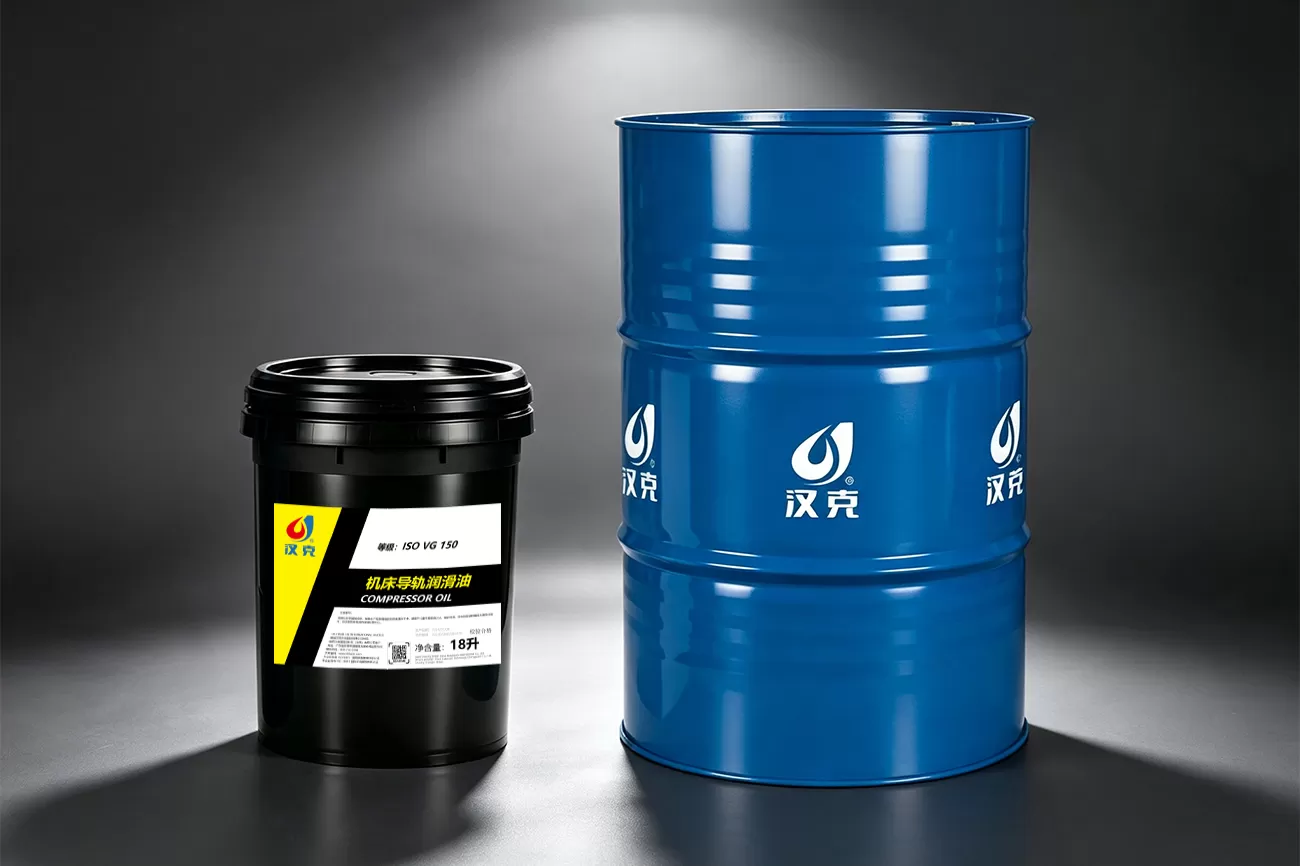


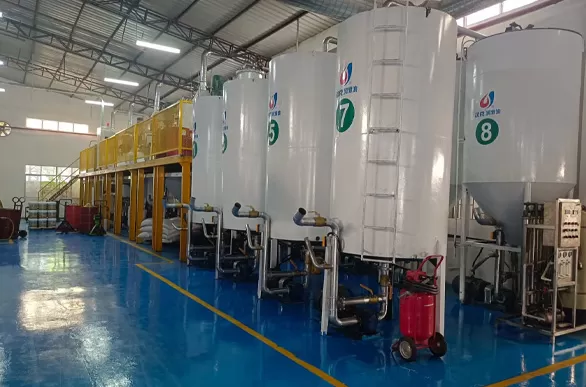

In the field of industrial manufacturing and warehousing logistics, rust on metal workpieces has always been a core pain point for engineers and warehouse managers. Whether it's precision bearings, gears and racks, or large molds and fasteners, once subjected to salt spray, moisture, or acid-base media during storage or transit, the result can range from surface rust spots affecting assembly precision to complete part scrapping, causing immeasurable economic losses. Addressing this long-standing industry challenge, Hank Metal Anti-Rust Oil BS-400 series enters the market with "long-term storage protection" and "salt spray resistance" as its core selling points. So, does this product truly deliver on its claims of providing durable, reliable protection for metals in extreme environments? This article will conduct an in-depth review from multiple dimensions including product characteristics, laboratory data, and real-world applications.
I. Product Positioning and Technical Background
Hank Metal Anti-Rust Oil BS-400 series is a specialized anti-rust oil designed for medium-to-long-term storage protection and high salt spray environments. The series covers multiple models with varying viscosity grades and evaporation characteristics to accommodate different metal materials, machining precision levels, and packaging methods. Compared to ordinary anti-rust oils, the BS-400 series emphasizes two major technical breakthroughs: first, it employs a composite anti-rust additive system that forms a dense, self-repairing molecular film on metal surfaces; second, it optimizes the permeability and spreadability of the base oil, ensuring uniform coverage even on workpieces with complex geometries, providing protection without dead corners.
In today's increasingly stringent environmental regulations, the BS-400 series strictly controls aromatic hydrocarbon content and volatile organic compound emissions, complying with RoHS and REACH standards, giving it a compliance advantage in protecting products exported to the EU and North American markets. Additionally, after use, this series of oils does not require complete removal before subsequent processing, and some models are even compatible with assembly lubricants, significantly reducing cleaning costs in the process chain.
II. Evaluation Environment and Testing Methods
To objectively assess the true performance of the BS-400 series, we selected the BS-401 (high flash point long-lasting type) and BS-402 (fast-drying thin oil type), the two most widely used models in the market, as test samples. The test substrates were common 45# carbon steel, cast iron, and galvanized sheets. After degreasing and derusting the surfaces, anti-rust oil was applied using both immersion and spray methods. The samples were then placed in three key scenarios: first, a 5% neutral salt spray test chamber simulating marine climates; second, a high-humidity constant temperature and humidity chamber (temperature 40°C, relative humidity 95%); and third, an outdoor exposure rack (simulating industrial atmospheric environments). The test cycles were set at 30 days, 60 days, and 90 days, with samples removed at each stage to observe rust area, oil film condition, and changes in metal luster.
III. Salt Spray Test: The True Touchstone
The salt spray test is the gold standard for measuring an anti-rust oil's resistance to salt spray. Under conditions of 5% sodium chloride solution, 35°C, and continuous spraying, unprotected carbon steel test panels typically develop pitting corrosion within 8 hours. In contrast, panels coated with BS-401, after 30 days (720 hours) of salt spray exposure, showed only slight loss of luster on the surface, with the oil film intact and no visible rust spots. Continuing the test to 60 days (1440 hours), extremely tiny pinpoint rust spots appeared at the panel edges, but the main surface remained intact. This result far exceeds the industry's typical requirement of 96 or 240 hours without rust, demonstrating that BS-401 possesses exceptional protective capability in marine transport or coastal warehousing environments.
BS-402 (fast-drying type) also performed impressively in the salt spray test. Due to its thin film and rapid drying, its initial anti-rust performance was slightly lower than BS-401, but after 30 days of salt spray, the oil film showed no cracking or peeling, and the metal surface only had a few watermark-like marks. After wiping with a cleaning agent, the metal substrate remained bright. This is mainly attributed to its sulfonate-based rust inhibitors, which chemically adsorb onto the metal, forming an irreversible passivation layer. It's worth noting that BS-402's thin oil film characteristics make it highly suitable for appearance protection of precision parts without affecting subsequent dimensional measurements or assembly.
IV. Long-Term Storage: 90-Day Simulated Warehouse Test
Long-term preservation is not just about "rust prevention"; the oil must maintain stable performance over months or even years without volatilizing, solidifying, or producing acidic decomposition byproducts. We extended the test in a constant temperature and humidity chamber to 90 days to simulate storage conditions during the plum rain season or high-humidity environments in southern China.
The results show that after the 90-day high-humidity test, BS-401 maintained a good oily state on its film, with no significant color darkening and minimal viscosity change. Using an acidity meter to measure the film extract, the pH value remained stable in the neutral range, indicating that the rust inhibitor additives did not degrade or decompose. The cast iron test plates showed no signs of "sweating" or "fuzzing," thanks to the volatile corrosion inhibitor auxiliary technology used in the BS-400 series, which creates a vapor-phase anti-rust atmosphere inside sealed packaging, providing dual protection for complex internal cavity structures.
BS-402, with its thinner film, experienced some film loss due to condensate washing in the 90-day high-humidity environment, but no rust was observed at the gaps. This indicates that its rust inhibitor has formed a strong chemical bonding layer on the metal surface, and even if the film thins locally, the protective effect persists. For customers requiring long-term storage, we recommend prioritizing BS-401; for scenarios with frequent workpiece turnover and on-demand access, BS-402 offers greater operational advantages.
5. Oil Film Performance and Subsequent Workpiece Processing
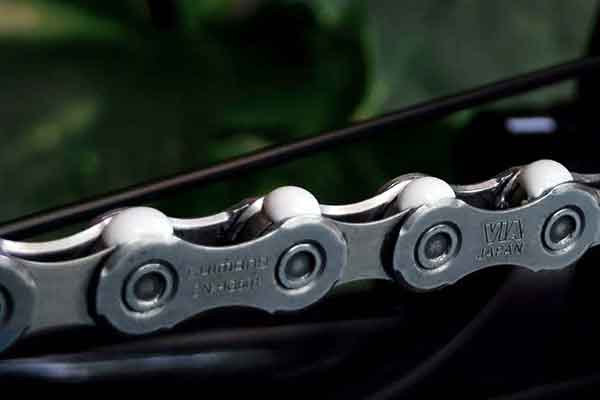
Beyond rust prevention, rust preventive oils must also be compatible with downstream processes. The BS-400 series achieves a fine balance in film performance. Using a coating thickness gauge, we measured the dry film thickness of BS-401 at approximately 15-20 microns, providing a certain resistance to mechanical scratches; BS-402's film thickness is controlled at around 5 microns, with a touch-dry time of about 10 minutes, making it suitable for components like chains and gears that require a clean surface.
In removability tests, we immersed test plates coated with the BS-400 series in a degreaser and ultrasonically cleaned them for 3 minutes at room temperature. The film completely detached, and the metal surface reached a hydrophilic state, ready for phosphating or electroplating processes. Additionally, BS-401's performance at high temperatures is noteworthy. We heated it to 80°C for 24 hours, and the film showed no flow or dripping, with no significant decline in rust prevention performance, proving its ability to withstand high-temperature warehouse conditions in tropical regions.
6. Real-World Application Cases and User Feedback
To provide a more comprehensive evaluation, we visited three manufacturing companies using the BS-400 series. An auto parts supplier reported that they used BS-401 to seal precision bearings exported to Southeast Asia. During container shipping, the bearings endured cabin temperatures above 40°C and salt spray corrosion. Upon arrival, inspection showed that the bearings' rotational flexibility and surface quality met customer requirements, and the return rate dropped from 5% to zero. Another wind power equipment maintenance company chose BS-402 to coat large gear sets. They noted that BS-402's thin oil film does not attract dust, and when inspected a year later, the gear surfaces remained rust-free, the oil film stayed soft, and the gears could be directly re-lubricated without additional cleaning.
However, some users also mentioned that after opening a drum of the BS-400 series, it should be sealed as tightly as possible; otherwise, prolonged exposure can cause solvent components to evaporate, increasing the oil's viscosity. Additionally, for workpieces with residual moisture after acid washing, it is recommended to dry them before applying the oil, as this can affect the density of the film. These usage details are not product defects but require proper handling by operators.
7. Environmental and Safety Assessment
Modern industry places increasing importance on the environmental performance of oils. The BS-400 series has a relatively mild odor, unlike the pungent solvent smell of traditional rust-preventive oils. It can be safely used in well-ventilated workshops with nitrile gloves. We also conducted a simple biodegradability review: the base oil uses a blend of deeply refined mineral oil and synthetic esters, contains no heavy metals or chlorinated paraffins, and complies with the ST2 standard. Waste oil can be disposed of through conventional recycling channels without causing additional pollution to soil or water sources.
8. Comparative Analysis with Competitors
To clarify the cost-effectiveness of the BS-400 series, we conducted a parallel comparison with two mainstream competing rust-preventive oils on the market (referred to as Brand A and Brand B). Under identical salt spray test conditions, Brand A showed edge corrosion after 240 hours, Brand B showed small rust spots after 480 hours, while BS-401 only exhibited slight loss of gloss after 720 hours, significantly outperforming both. In terms of price, the BS-400 series has a slightly higher per-kilogram price than Brand A but is lower than Brand B. Considering its longer protection period, the actual unit protection cost is lower. Especially when handling high-value workpieces, the BS-400 series can significantly reduce rework and scrap risks, delivering outstanding overall benefits.
9. Summary and Recommendations
The Hank Metal Rust-Preventive Oil BS-400 series, with its solid formulation technology and strict quality control, demonstrated excellent long-term sealing capability and salt spray resistance in this evaluation. BS-401 is suitable for long-term sealing, ocean shipping, and high-humidity, high-salt environments, and is recommended for castings, molds, and construction machinery parts. BS-402 is suitable for short-term rust prevention and precision workpiece protection, and is recommended for bearings, rails, cutting tools, and metal products requiring a clean appearance. If your factory is struggling with persistently high metal corrosion rates, or if you are about to export products to high-salt-spray regions, the BS-400 series is undoubtedly a trustworthy choice. Of course, the effectiveness of any rust-preventive oil depends on proper surface pretreatment and coating processes. We recommend that companies conduct small-batch validation before first use to match the most suitable model and oil quantity.
In summary, in the two core dimensions of long-term sealing and salt spray resistance, the Hank Metal Rust-Preventive Oil BS-400 series not only met its advertised standards but even exceeded expectations in some test items. With real data and reliable performance, it sets a new benchmark for industrial metal protection.