



Effective lightweighting depends on high-performance lubricants
Although today's vehicles are designed to provide a smoother ride and a quieter cabin, improved sound insulation that isolates road and engine noise makes exterior vehicle noises more noticeable. Unfortunately, most standard greases cannot adequately address the challenges posed by these noise, vibration, and harshness (NVH) issues and automotive buzz, squeak, and rattle (BSR) noises. Conventional greases may also react chemically with the materials they contact, causing component degradation or discoloration.
Automakers optimize tire treads to reduce road noise and use foam and insulation materials to reduce rattles and noise in the cabin. Just as they innovate in design to address noise, vibration, and harshness (NVH) and automotive buzz, squeak, and rattle (BSR) issues, they are also considering a class of high-performance lubricants that can more effectively reduce or eliminate these squeaks and rattles compared with silicone-based lubricants.
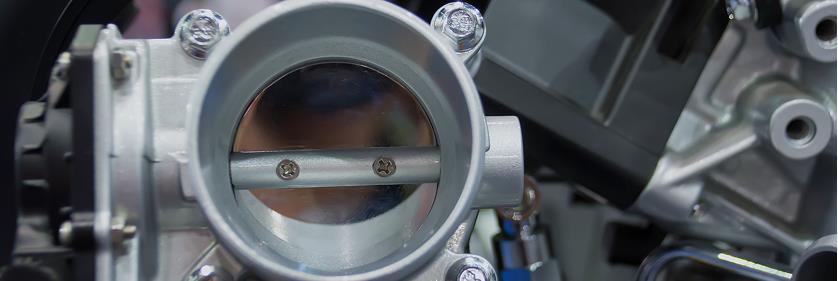 Electric Vehicle Throttle Body
These perfluoropolyether (PFPE)-based lubricants meet the performance and longevity demands of today's vehicles, including chemical inertness, durability, compatibility with the various materials used in vehicle construction, and low volatility.
Download our white paper on eliminating noise, vibration, and harshness (NVH) to keep the cabin quiet. This white paper discusses the benefits of using Hank high-performance lubricants that better meet the performance requirements arising from the use of new materials and technologies in modern vehicle manufacturing and production to address NVH and BSR issues.