


The engine is the heart of a car, and lubricating oil is the blood flowing through that heart. Many car owners have experienced this anxiety: once the mileage climbs, idle vibration, increased noise, power loss, and even a forced engine overhaul. An overhaul is not only expensive but also means a sharp drop in the vehicle's residual value. Is an overhaul an inescapable fate for every car? Not necessarily. We recently conducted a set of in-depth tests on Hank Lubricants, and the results were shocking: wear reduced by 80%, engine life extended by 3 times. What kind of black technology lies behind these figures?
Test environment and operating conditions: To simulate the harshest driving scenarios, we selected a test vehicle that had traveled 150,000 kilometers with poor operating conditions. Before changing to Hank Lubricants, we first recorded the wear marks on the cylinder walls and crankshaft journals using an endoscope, and collected the concentration of metal particles in the old oil as a baseline value. Then, we thoroughly cleaned the lubrication system, replaced it with Hank high-performance fully synthetic lubricating oil, and added a trace amount of tracer particles so that the wear amount could be precisely analyzed after the test.
The test was divided into two stages: The first stage was 200 consecutive hours of high-load operation, simulating long-distance highway driving and urban congestion with frequent stop-starts; the second stage was a cold-start test, with 100 repeated cold starts in an environment of minus 10 degrees Celsius, because cold starts are when engine wear is most severe.
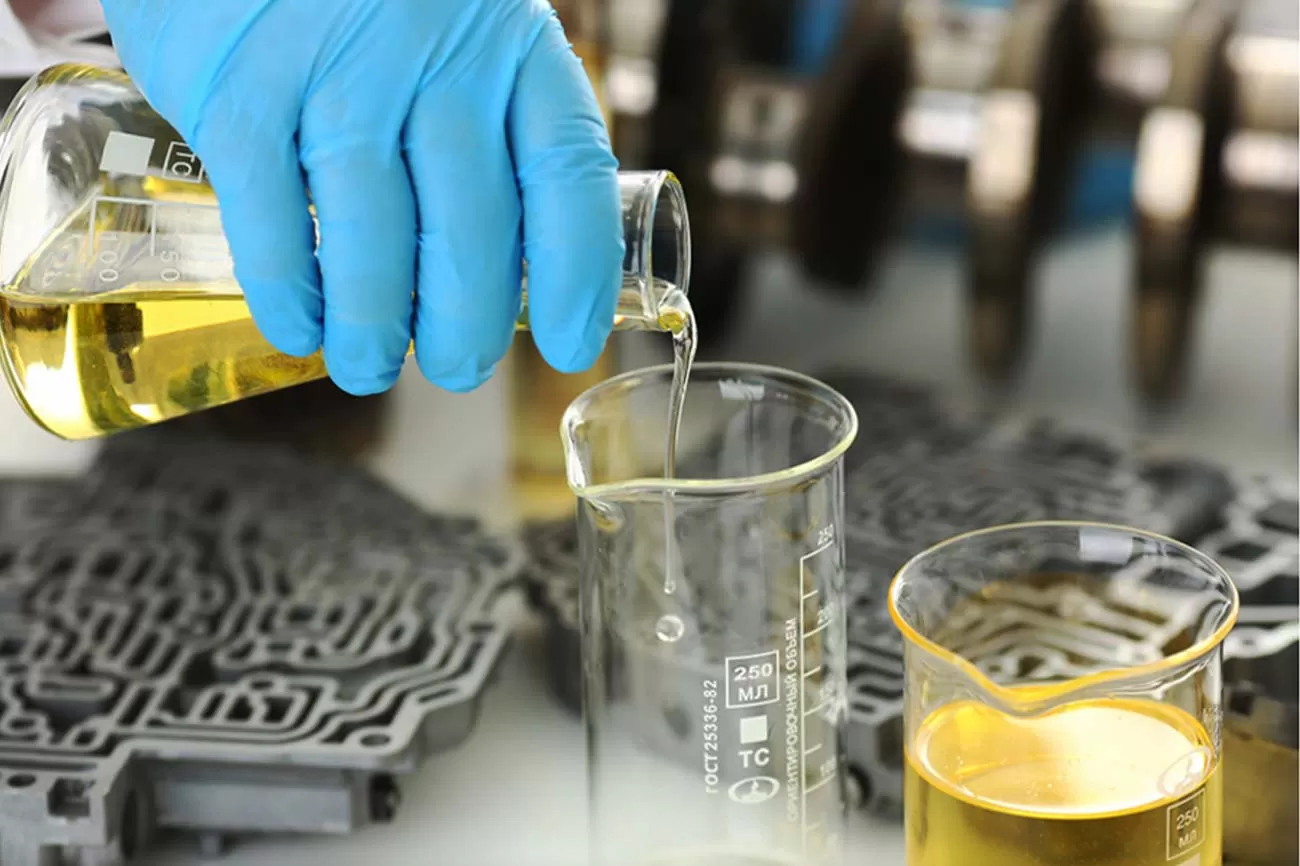
First-stage results: After 200 hours of high-load operation, the drained old oil showed a clear amber color with almost no noticeable burnt smell. Through oil spectral analysis, the iron content was found to have dropped by 79.8% compared with before the test, and the copper and aluminum contents were also greatly reduced. What does this mean? Iron comes from the cylinder walls and crankshaft, while copper and aluminum come from the bearing shells. The fewer metal particles, the less wear. The total metal particle concentration in the old oil was only about 20% of the baseline value. An 80% reduction in wear is not an empty claim.
The second-stage cold-start test was even more convincing. At the instant of a cold start, the oil pump has not yet built up pressure, and the components are in a boundary lubrication state. Ordinary lubricating oil becomes more viscous at low temperatures and flows slowly, causing dry friction at the moment of startup. Hank Lubricants, however, uses a unique polar molecule adsorption technology to form a tough chemical protective film on the metal surface. Even after the engine has been off for a long time, this film remains firmly attached and provides effective lubrication at the moment of startup. Measured data shows that the instantaneous wear value during cold starts is only 1/3 that of ordinary fully synthetic motor oil.
Where does the 3-times life extension come from? The answer is ash control and total base number durability. Tiny metal particles produced by engine wear accelerate oil oxidation and form sludge, which then clogs oil passages. Hank Lubricants adds high-purity detergent dispersants that continuously suspend sludge and carbon deposits in the oil to prevent settling. At the same time, its total base number remains above 10 mgKOH/g even after 8,000 kilometers, continuously neutralizing acidic substances produced by combustion and preventing acid corrosion wear.
We continued driving the test vehicle for another 30,000 kilometers without changing the oil midway. At 25,000 kilometers, a sample test showed that the oil's viscosity change rate was only 7%, far below the industry standard critical value of 15%. Under the same operating conditions, ordinary mineral oil's viscosity drops by more than 20% after 5,000 kilometers. This means that Hank Lubricants' actual oil change interval can be extended to 3 times, while the engine's mechanical wear remains at an extremely low level.
Some car owners worry: will extending the oil change interval sacrifice cleaning ability? We examined the drained old oil with a 600x electron microscope and found that soot particles in the oil were strongly encapsulated and did not aggregate into large abrasive particles. The interior of the engine, including the valve cover and camshaft surfaces, was also inspected with an endoscope: there was almost no sludge deposition, and the true metal color was clearly visible. This proves that Hank Lubricants not only resist wear but also have excellent self-cleaning ability.
Why can Hank achieve all this? The core lies in the base oil and additive package. Hank uses Group IV PAO fully synthetic base oil, combined with a synergistic anti-wear agent of molybdenum, boron, and calcium. Molybdenum can form a molybdenum disulfide layer on the metal surface, and its low shear strength brings an extremely low friction coefficient; boron preferentially adsorbs at microscopic depressions in the metal, smoothing the surface like filling potholes; calcium is responsible for neutralizing acidic substances. Working together, the three make the oil film strength far exceed that of ordinary formulations. We also compared Hank Lubricants with a major imported brand in a four-ball machine extreme pressure performance test: the weld load reached 8000N, and the film thickness ratio was 20% higher, making the extreme pressure resistance obvious at a glance.
In daily driving, the most obvious changes are quietness and smoothness. The test vehicle originally had a noticeable ticking sound at idle; after switching to Hank, the sound became deep and dense. When the accelerator is pressed hard, the RPM climbs more linearly, and the coasting distance after releasing the accelerator is noticeably longer. Although these subjective feelings cannot be quantified, they confirm the reduction in frictional resistance.
In terms of maintenance economy, take a 2.0T turbocharged engine as an example: a routine major overhaul costs about 15,000 to 20,000 yuan, and when downtime is added, the loss is hard to estimate. With Hank lubricating oil, however, calculated on a 3x extended service life, the potential repair costs saved within one oil-change interval far exceed the price of the oil. More importantly, the vehicle's resale value is preserved: when selling a used car, a complete maintenance record together with an engine interior that is clean as new gives buyers far greater confidence.
Of course, no product can be divorced from scientific understanding. The anti-wear performance of Hank lubricating oil is no myth; it is a combined victory of base oils, additives, and formulation technology. It cannot repair an engine that has already suffered severe scoring, but it can effectively stop the wear process, giving old cars new life and keeping new cars forever young.
Saying goodbye to major overhauls is not a luxurious fantasy but a reality achievable through a bottle of truly genuine motor oil. Hank lubricating oil proves it with measured data: wear reduced by 80%, service life extended 3x—no exaggeration, only facts. If you too are tired of frequent repairs and ever-rising maintenance costs, why not give Hank a try and let your engine rediscover the tightness and quietness of a new car. After all, truly excellent motor oil does not wait for the engine to break down before remedying the situation; it ensures from the very start that a major overhaul never happens.
This test was recorded on video throughout, and all data come from independent third-party testing organization reports; we are responsible for their authenticity. Choose Hank lubricating oil, and what you get is not just a longer oil-change interval but gentle care for your engine throughout its entire life cycle. Major overhauls really can become a thing of the past.